Email: arjgeniux@gmail.com | Call: +918013 31 1313

Email: arjgeniux@gmail.com | Call: +918013 31 1313

Course Short Name: DHM
Course Code: ARJ0170
Course Type: Diploma
Duration: 1 Year
Eligibility: 10th/12th
The majority of the course time is dedicated to the practical and theoretical knowledge of these four key departments:
| Theory & Knowledge | Practical Skills (Hands-on Training) |
|---|---|
| Introduction to Cookery: Kitchen hierarchy (Brigade System), kitchen safety, hygiene, and fire safety. | Basic Culinary Skills: Knife skills, mise en place (preparation), cooking methods (boiling, frying, baking, roasting, grilling). |
| Food Commodities: Classification and storage of vegetables, fruits, cereals, pulses, eggs, dairy, and meat. | Basic Preparations: Stocks, soups (Mother Sauces and Derivatives), basic Indian and Continental recipes. |
| Catering Science & Hygiene: Microorganisms, food spoilage, contamination, food preservation techniques, and safety standards (HACCP introduction). | Basic Bakery & Patisserie: Preparing basic doughs, simple cakes, pastries, and bread. |
| Theory & Knowledge | Practical Skills (Hands-on Training) |
|---|---|
| Restaurant Operations: Types of F&B operations (restaurants, banquets, bars), restaurant layout, and furniture. | Service Techniques: Carrying plates, tray service, napkin folding, professional grooming, and guest interaction. |
| Service Styles & Equipment: Classification and use of crockery, cutlery, glassware, and specialized equipment. Types of service (French, English, American, Russian). | Table Setting: Laying covers for various meals (breakfast, lunch, dinner) and banquet setups. |
| Beverages: Classification of non-alcoholic beverages (tea, coffee, mocktails) and introduction to alcoholic beverages (wine, beer, spirits). | Bar & Banquet Service: Basic knowledge of bar setup, cocktail tools, and handling group service. |
| Theory & Knowledge | Practical Skills (Hands-on Training) |
|---|---|
| Introduction to Hospitality: Hotel organization, classification of hotels, and departmental hierarchy. | Guest Cycle: Practical roles in the guest cycle (Reservation, Check-in, Stay, Check-out). |
| Reservations & Reception: Reservation modes, room types, tariff structures, and handling bookings (manual and computerized). | Computerised Front Office: Introduction to Property Management Systems (PMS) like Fidelio/Opera (theory or basic simulation). |
| Guest Services: Handling guest queries, mail, key control, managing VIP/VVIP arrivals, and resolving guest complaints. | Check-in/Check-out: Completing registration cards, processing payments, and performing express check-out. |
| Theory & Knowledge | Practical Skills (Hands-on Training) |
|---|---|
| Housekeeping Role: Department organization, inter-departmental coordination, and the importance of cleanliness. | Room Preparation: Step-by-step procedure for cleaning a guest room, bed making, and daily cleaning schedules. |
| Cleaning Equipment & Agents: Classification of cleaning chemicals, detergents, and the use of various cleaning machinery. | Laundry & Linen: Handling guest laundry, linen inventory, and maintenance of uniforms and house linen. |
| Desk Control & Inventory: Managing keys, the lost-and-found system, and inventory control for cleaning supplies and guest room amenities. | Public Area Cleaning: Cleaning procedures for lobbies, corridors, and restrooms. |
These subjects provide the necessary background knowledge for professional growth.
Hospitality Communication / English: Focusing on industry-specific vocabulary, telephone etiquette, business correspondence, and developing effective soft skills for guest interaction.
Basic Computer Applications: Introduction to MS Office (Word, Excel) for creating reports, billing, and using basic hotel software.
Hotel Accountancy / Financial Basics: Principles of accounting, basics of Profit & Loss statements, budgeting, and cost control for F&B items.
Nutrition and Food Science: Understanding macro/micro-nutrients, balanced diets, and the effects of cooking on food quality.
Principles of Management: Introduction to basic management concepts like planning, organizing, staffing, and directing in a hospitality context.
Industrial Exposure Training (IET) / Internship: A mandatory practical component, typically lasting 4 to 6 months, where students work in a hotel setting to apply their skills in a real-world environment.
Project Work: A practical report or presentation based on the industrial training or a specific area of hotel operations.
This syllabus ensures that a student is immediately deployable in an operational role upon graduation.

Course Short Name: DFA
Course Code: ARJ0171
Course Type: Diploma
Duration: 1 Year
Eligibility: 10th/12th
This section covers the entire Guest Cycle and the essential technical knowledge required for the job.
Hospitality Industry Overview: Classification of hotels (e.g., star ratings, types), hotel organization structure, and the role of the Front Office as the "face" of the property.
Departmental Coordination: Understanding the crucial link between Front Office, Housekeeping, Food & Beverage, and Maintenance.
Front Office Layout & Equipment: Study of the physical setup, essential tools, communication systems (PBX/PABX), and key control systems.
This module details the step-by-step procedures for managing a guest's stay.
| Stage | Key Knowledge & Skills |
|---|---|
| Pre-Arrival | Reservations: Handling booking inquiries (phone, email, online), different reservation modes, and maintaining reservation records. Types of rooms and rate structures (rack rate, corporate rate, package rate). |
| Arrival | Check-in Procedures: Greeting guests, completing registration formalities, handling walk-ins, assigning rooms, and processing identification/documents. Key/access card issuance. |
| Occupancy/Stay | Guest Services: Handling guest messages, mail, wake-up calls, room change requests, and basic concierge services (information on local attractions, transport). Handling Complaints and basic troubleshooting. |
| Departure | Check-out Procedures: Generating bills, verifying charges (F&B, laundry, minibar), accepting various forms of payment (cash, credit card, foreign exchange), and conducting express check-out. |
Basic Accounting: Introduction to the Front Office cash flow, guest ledgers, city ledgers, and understanding the role of the Night Auditor (basic concepts).
Property Management Systems (PMS): Theoretical introduction and basic practical simulation/training on industry-standard PMS software (e.g., Fidelio, Opera, or similar training modules) for reservations, check-in, and billing.
Cash and Credit Handling: Procedures for maintaining a cash float, foreign currency exchange, and processing credit card authorizations.
These subjects build the professionalism and soft skills necessary for success.
Professional Communication: Developing verbal communication skills, telephone etiquette, and email correspondence. Focusing on clear, polite, and persuasive language.
Grooming and Etiquette: Training on professional appearance, body language, and workplace etiquette required for a guest-facing role.
Conflict Resolution: Techniques for handling difficult guests, managing high-pressure situations, and turning complaints into opportunities for service recovery.
Computer Skills: Proficiency in basic MS Office applications (Word, Excel) for report generation, correspondence, and data entry.
Business Mathematics: Simple calculations related to room rates, discounts, taxes, commission, and currency conversions.
Safety and Security: Awareness of emergency procedures, guest security, fire safety protocols, and handling of suspicious packages or situations.
The diploma concludes with a mandatory focus on practical application:
Role-Playing and Simulation: Extensive practice sessions simulating real-life front desk scenarios.
Industrial Exposure Training (IET): Often, a 3 to 6-month internship in a hotel or corporate setting to gain hands-on experience under industry supervision.

Course Short Name: DHK
Course Code: ARJ0172
Course Type: Diploma
Duration: 1 Year
Eligibility: 10th
The majority of the course is dedicated to the operational procedures and standards of the housekeeping department.
Role of Housekeeping: Understanding the importance of housekeeping as the backbone of guest satisfaction; departmental organization and coordination with the Front Office and Maintenance.
The Guest Room: Classification of guest rooms (e.g., single, double, suite, connecting) and standard layouts.
Staffing & Supervision: Roles and responsibilities of room attendants, floor supervisors, and the linen/laundry manager. Basic staff scheduling and workload management.
Cleaning Sequence: The systematic, step-by-step process for cleaning a vacant room and an occupied room to standard.
Bed Making: Mastering professional techniques for bed making, including changing linen, using correct folds, and achieving a wrinkle-free look.
Bathroom Cleaning: Detailed procedures for sanitizing, disinfecting, and polishing bathroom fixtures and tiles.
Room Checks: Performing quality checks and recording room status (e.g., V/C - Vacant Clean, O/D - Occupied Dirty) accurately.
Cleaning Schedules: Developing schedules for lobbies, corridors, elevators, stairs, restrooms, and back areas.
Outdoor Maintenance: Basic knowledge of gardening, swimming pool area maintenance, and waste disposal management.
Pest Control: Understanding different types of pests (insects, rodents) and the various methods for prevention and control used in hospitality.
These modules focus on the tools, materials, and specialized knowledge of the trade.
Cleaning Agents: Classification and correct usage of detergents, abrasives, polishes, disinfectants, and specialized chemicals for different surfaces (e.g., acid vs. alkaline cleaners). Understanding MSDS (Material Safety Data Sheets).
Equipment: Operation and maintenance of manual cleaning tools, vacuum cleaners (dry/wet), carpet shampooers, floor buffers, and high-pressure washers.
Stain Removal: Identification of common stains (e.g., grease, coffee, ink) and the appropriate chemical or procedure for their removal without damaging fabric or surfaces.
Linen Control: Inventory management, proper storage, segregation, and issuing of linen to various floors and outlets.
Laundry Operations: Overview of the laundry process (washing, rinsing, extracting, drying, pressing). Understanding different fibers and their care labels.
Uniform Room: Management and maintenance of staff uniforms.
Guest Laundry: Procedures for handling, processing, and delivering guest dry-cleaning and laundry services.
Guest Handling: Handling guest requests (e.g., extra pillows, maintenance issues) and effectively managing complaints related to cleanliness or amenities.
Lost and Found: Detailed procedures for handling, recording, storing, and disposing of items left behind by guests.
Safety and Security: Housekeeping's role in guest security, following safety protocols, and using PPE (Personal Protective Equipment) correctly.
Stock Control: Maintaining inventory of cleaning supplies and guest room amenities; generating purchase requests.
Communication Skills: Developing clear communication, telephone etiquette, and inter-departmental report writing.
The diploma typically culminates in Practical Assessments and often includes a mandatory Industrial Exposure Training (IET) or Internship (usually 3 to 6 months) to apply the learned skills in a functioning hotel environment.
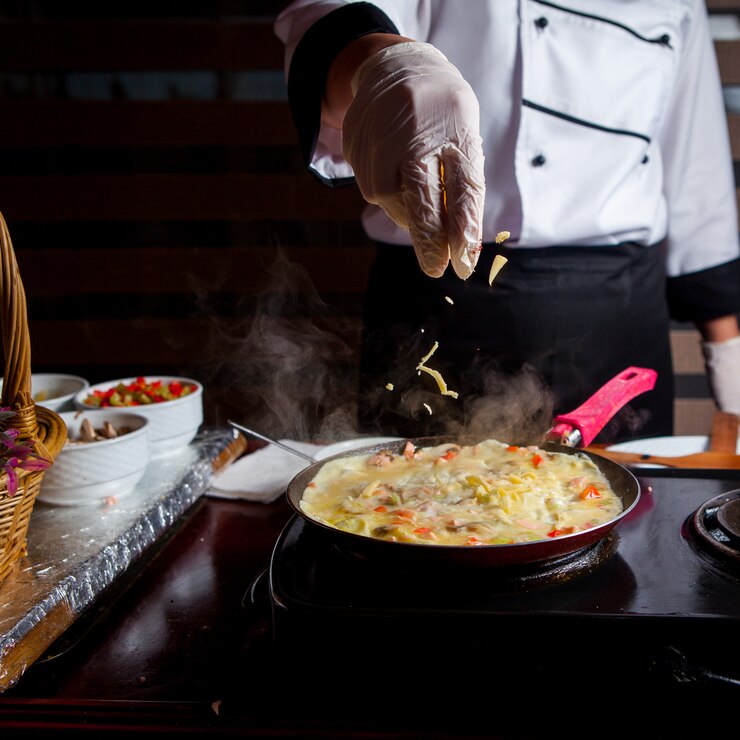
Course Short Name: Food & Beverage Management
Course Code: ARJ0173
Course Type: Diploma
Duration: 1 Year
Eligibility: 10th/12th
This module focuses on guest interaction, service standards, and front-of-house administration.
Restaurant Organization: Study of the F&B organization chart, the Brigade de Cuisine and Brigade de Service systems, and staff roles (head waiter, sommelier, bartender).
Service Standards: Mastering different service styles (e.g., American, French, Russian, Gueridon/Flambé service), carrying techniques, and tray handling.
Equipment: Identification and appropriate use of crockery, cutlery, glassware, linen, and specialized service equipment.
Menu Knowledge: Understanding menu planning, design, layout, and common menu terminology.
Non-Alcoholic Beverages: Detailed knowledge of tea, coffee (brewing methods, types), and specialty drinks.
Alcoholic Beverages: Classification, production methods, and serving temperatures for Wines, Spirits (e.g., whiskey, vodka, gin), and Beer.
Bar Management: Introduction to bar layout, bar inventory control, and basic cocktail preparation (mixology fundamentals).
Responsible Service: Understanding local laws, responsible alcohol service guidelines, and handling intoxicated guests.
While the focus is on management, a basic understanding of kitchen operations is essential for control and quality.
Kitchen Safety and Hygiene: Emphasis on HACCP (Hazard Analysis Critical Control Point) principles, food handling safety, sanitation standards, and personal hygiene.
Food Commodities: Basic knowledge of meat, poultry, fish, vegetables, and dairy, focusing on quality identification, storage, and handling to minimize wastage.
Basic Cookery: Introduction to the five Mother Sauces, basic stock preparation, and core cooking methods (e.g., roasting, poaching, sautéing).
Patisserie Basics: Understanding simple doughs, pastries, and desserts for operational oversight.
This is the core differentiator, focusing on the financial and logistical control of the F&B enterprise.
F&B Cost Control: Understanding the difference between fixed and variable costs. Calculating Food Cost Percentage and Beverage Cost Percentage.
Purchasing and Receiving: Procedures for raising purchase requisitions, supplier selection, receiving goods, and quality checks.
Storage and Inventory: Techniques for proper dry storage, refrigeration, and frozen storage. Inventory valuation methods (e.g., FIFO - First-In, First-Out).
Yield Testing: Basic calculation of true food cost by conducting yield tests on raw ingredients.
Service Planning: Forecasting demand, calculating staffing needs, and creating duty rosters.
Customer Relations: Handling guest feedback and complaints, and implementing service recovery procedures.
Technology in F&B: Introduction to POS (Point of Sale) systems for order taking, billing, and generating management reports.
Basics of Marketing: Understanding the 4 Ps of Marketing as applied to restaurant operations.
The diploma concludes with rigorous Practical Exams and often includes a mandatory Industrial Exposure Training (IET) or Internship (typically 3 to 6 months) to provide real-world managerial experience.

Course Short Name: Bakery & Confectionery Course
Course Code: ARJ0174
Course Type: Diploma
Duration: 1 Year
Eligibility: 10th/12th
The majority of the course time is spent in the production kitchen, mastering these techniques:
Kitchen Safety & Hygiene: Personal hygiene, food handling safety, sanitation standards, and kitchen organization (HACCP principles introduction).
Equipment Handling: Safe and proficient use of mixers, ovens, dough provers, shapers, sheeters, deep fryers, and specialized pastry tools.
Ingredients Knowledge: Detailed study of the function of core ingredients: Flour (types, gluten development), Yeast (types, fermentation process), Fats (butter, margarine, oil, shortening), Sugars, and Eggs.
Weights and Measures: Mastering accurate scaling and volumetric measurements, and understanding ingredient ratios.
Bread Making: Techniques for mixing, kneading, proofing, shaping, and baking a variety of yeasted doughs.
Basic Breads: Production of White Bread, Brown Bread, Wholemeal Bread, and basic dinner rolls.
Specialty Breads: Production of regional and enriched breads like French Baguette, Ciabatta, Vienna Bread, Sweet Buns, and Donuts.
Sourdough Introduction: Basic understanding of starters and natural fermentation.
Cakes and Sponges: Methods for mixing and baking various cakes (e.g., Creaming method, All-in-one method). Production of sponges, pound cakes, muffins, and tea cakes.
Icings and Fillings: Preparation of classic icings (e.g., Buttercream, Royal Icing, Glazes, Ganache) and fillings (e.g., Custards, Pastry Cream, Fruit Fillings).
Pastry: Production of basic shortcrust, choux pastry, puff pastry, and filo pastry. Application in making tarts, éclairs, and vol-au-vents.
Mousses and Desserts: Preparation of chilled desserts, mousses, soufflés (basic), and classic plated desserts.
Chocolate Tempering: Learning the critical process of tempering chocolate for stable coatings and decorations.
Basic Decorations: Piping techniques, writing, basic modeling with chocolate and fondant, and preparing simple edible garnishes.
Sugar Confectionery: Introduction to boiling sugar to various stages for decorations, caramel, and fudge.
These subjects provide the essential foundation for quality control and financial viability.
Baking Chemistry: Understanding the chemical reactions during baking (e.g., Maillard reaction, caramelization, gluten formation).
Spoilage and Preservation: Identifying causes of spoilage and methods of preservation (e.g., freezing, cooling, packaging) specific to baked goods.
Basic Nutrition: Understanding the nutritional value of baked products, fat and sugar content, and options for healthier substitutions.
Recipe Costing: Detailed calculation of the cost of each ingredient and determining the unit cost of a finished product.
Yield Management: Calculating ingredient usage, minimizing wastage, and controlling production costs.
Inventory Control: Procedures for ordering, receiving, and storing raw materials.
Packaging and Display: Principles of attractive packaging, shelving, and displaying products for retail sale.
The diploma strongly emphasizes skill development, culminating in a final Practical Examination and often a mandatory period of Industrial Training/Internship where students work in a professional bakery environment.
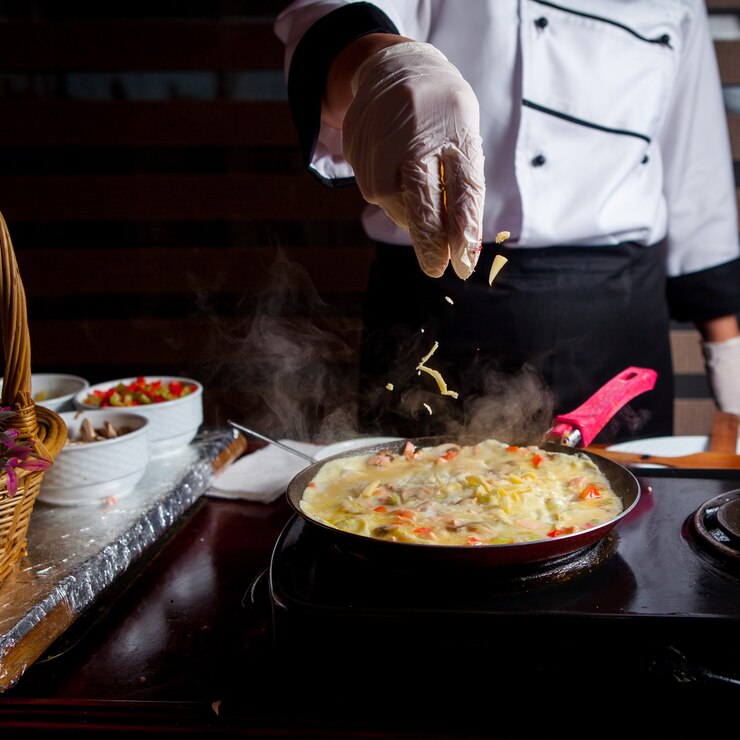
Course Short Name: DIC
Course Code: ARJ0175
Course Type: Diploma
Duration: 1 Year
Eligibility: 10th/12th
The majority of the curriculum is dedicated to mastering hands-on techniques in the training kitchen, typically covering different culinary streams.
Kitchen Safety and Hygiene (HACCP): Personal hygiene, food handling, cross-contamination prevention, cleaning schedules, and the role of the HACCP (Hazard Analysis Critical Control Point) system.
Tools and Equipment: Identification, proper use, and maintenance of all standard hand tools, knives (mastering various knife skills), and kitchen machinery (mixers, slicers, ovens, etc.).
Mise en Place: Understanding the importance of preparation, organization, and the systematic approach to starting service.
Stocks and Soups: Detailed preparation of basic stocks (white, brown, fish, vegetable) and the production of cream, purée, clear, and national soups.
Sauces (The Mother Sauces): Mastery of the five classic Mother Sauces (Béchamel, Velouté, Espagnole, Hollandaise, and Tomate) and their secondary derivatives.
Methods of Cookery: Application of all standard cooking methods: boiling, poaching, steaming, grilling, roasting, frying (shallow and deep), braising, and stewing.
Meat, Poultry, and Fish: Identification of various cuts of meat (butchery basics), proper handling, storage, and preparation techniques. Filleting and portioning of fish and poultry.
Vegetables and Starches: Preparation and cooking of vegetables, potatoes, pasta, and rice.
Eggs and Dairy: Various methods of egg cookery and the use of dairy products in savory preparations.
Cakes and Pastries: Introduction to basic baking methods, making simple sponges, shortcrust, choux, and puff pastry.
Desserts: Preparation of chilled desserts, basic sauces (e.g., custard, crème anglaise), and plating techniques.
These subjects provide the foundational knowledge for professionalism and kitchen administration.
Salads and Dressings: Preparation of various salads, vinaigrettes, and mayonnaise-based dressings.
Cold Cuts and Appetizers: Basic knowledge of canapés, hors d'oeuvres, and simple cold food presentation.
Sandwich Preparation: Techniques for various types of sandwiches and wraps.
Kitchen Hierarchy: Understanding the classical Brigade System and roles within a modern commercial kitchen.
Cost Control: Calculating portion costs, minimizing waste, and the principles of purchasing and storing food using the FIFO (First-In, First-Out) system.
Menu Planning: Understanding menu types (e.g., à la carte, table d'hôte), menu design, and menu engineering basics.
Nutritional Basics: Understanding macro- and micro-nutrients, balanced diets, and the nutritional value of various food items.
Food Science: The effect of heat, acids, and bases on food structure during cooking and preparation.
The diploma typically culminates in a rigorous Practical Examination and often includes a mandatory period of Industrial Exposure Training (IET) or Internship (usually 3-6 months) to apply learned skills in a professional, high-volume environment.

Course Short Name: ADHM
Course Code: ARJ0176
Course Type: Diploma
Duration: 2 Year
Eligibility: 10th/12th
The first year is typically dedicated to mastering the core operational skills through both theory and extensive practical lab work.
| Module | Core Topics Covered | Practical Focus |
| Food & Beverage Production (F&B) | Basic Cookery (Stocks, Soups, Sauces), Kitchen Organization (Brigade System), Food Commodities, Safety & Hygiene (HACCP). | Knife Skills, Basic Continental, Indian, and Regional Preparations; Introduction to Bakery & Confectionery. |
| Food & Beverage Service (F&B) | Service Styles (A la carte, Table d'hôte), Equipment, Menu Knowledge, Bar Operations (Beverage Classification, Mixology Basics). | Tray Handling, Silver Service Techniques, Table Setting, Non-alcoholic and Alcoholic Service. |
| Front Office Operations | Guest Cycle (Reservation, Check-in, Stay, Check-out), Room Types & Tariff, Communication, Basic Accounting (Guest Folios). | PMS Software Simulation, Role-Playing for Check-in/out, Handling Telephones and Messages. |
| Housekeeping & Laundry | Room Cleaning Procedures, Public Area Cleaning, Chemical Knowledge, Linen & Laundry Operations, Inventory Control. | Bed Making, Use of Cleaning Equipment, Stain Removal Techniques. |
The second year shifts the focus to supervisory, administrative, and strategic knowledge.
F&B Control: Detailed calculation of Food Cost Percentage and Beverage Cost Percentage. Cost reduction techniques, waste management, and inventory control (FIFO).
Hotel Accounting: Understanding the Uniform System of Accounts for the Lodging Industry (USALI), preparing departmental operating statements, budgeting, and capital expenditure basics.
Purchasing & Stores: Supplier management, establishing purchasing specifications, and effective storage procedures.
Human Resource Management (HRM): Manpower planning, recruitment, selection, training and development, performance appraisal, and addressing employee relations issues in a hotel setting.
Sales and Marketing: Market segmentation, creating marketing strategies (4 Ps), basic digital marketing for hotels, and pricing strategies (Revenue Management basics).
Facilities Planning: Introduction to hotel design, layout, energy conservation, maintenance planning, and fire safety systems.
Advanced F&B Service: Understanding Gueridon Service, Wine & Food pairing, Cigar and Coffee service, and detailed knowledge of banquet and outdoor catering operations.
Advanced Front Office: Credit control, handling high-profile guests (VIP/VVIP), managing guest history, and advanced Yield/Revenue Management techniques.
A major component that distinguishes the two-year program is the depth and duration of practical exposure:
Industrial Exposure Training (IET): Typically a mandatory 6-month internship (often split between the two years or done entirely after Year 1) in various departments of a star-rated hotel. This is designed to give the student practical, real-world experience under professional supervision.
Project Work/Dissertation: Students are usually required to undertake a detailed research project or case study on a specific area of hotel operations or management (e.g., "A study of F&B cost control effectiveness").
Communication Skills & Business Writing: Focus on formal reports, proposals, and professional correspondence.
Computer Applications & IT: Advanced use of Property Management Systems (PMS), and data analysis using specialized software.
Law: Introduction to contract law, labor laws, and licensing required for hotel operations.

Course Short Name: Diploma in Yoga
Course Code: ARJ0177
Course Type: Diploma
Duration: 1 Year
Eligibility: 10th/12th
The curriculum generally covers the following major areas:
This module grounds the practice in classical texts and concepts.
Introduction to Yoga: Meaning, definition, and the history and evolution of Yoga (Vedic period to modern times).
The Yoga Sutras of Patanjali: Detailed study of the Ashtanga Yoga (Eight Limbs of Yoga):
Yama (Moral Disciplines): Ahimsa (Non-violence), Satya (Truthfulness), Asteya (Non-stealing), Brahmacharya (Continence), Aparigraha (Non-possessiveness).
Niyama (Self-Restraints): Saucha (Purity), Santosha (Contentment), Tapas (Austerity), Svadhyaya (Self-study), Ishvara Pranidhana (Surrender to God/Higher Self).
Asana, Pranayama, Pratyahara, Dharana, Dhyana, Samadhi.
Hatha Yoga: Study of classical texts like the Hatha Yoga Pradipika and Gheranda Samhita. Concepts of Nadis (energy channels like Ida, Pingala, Sushumna) and Chakras (energy centers).
Ethics: Ethical guidelines for a yoga teacher, professional conduct, and the guru-shishya (teacher-student) relationship.
This is the core hands-on component for developing personal practice and teaching competence.
Categorization: Study of different types of postures: standing, sitting, prone, supine, inversions, and balancing postures.
Technique: Detailed instruction on correct alignment, entry, hold, and exit from all major poses.
Modifications: Learning variations and the use of props (e.g., blocks, straps, blankets) for different student abilities and conditions.
Sequencing: Principles of intelligent class sequencing, including warm-ups, peak poses, counter poses, and cool-downs.
Basic Breathing: Abdominal, Thoracic, and Clavicular breathing (Yogic breathing).
Classical Techniques: Practice and instruction of Kapalabhati (Skull Shining Breath), Bhastrika (Bellows Breath), Nadi Shodhana (Alternate Nostril Breathing), Sheetali (Cooling Breath), and Ujjayi (Victorious Breath).
Introduction to basic cleansing practices like Jala Neti (Nasal Cleansing) and Kapalabhati.
Dhyana: Various techniques for concentration and meditation, including object-focused, breath-focused, and mantra-based meditation.
Yoga Nidra: Systematic deep relaxation techniques.
Understanding the body for safe and effective practice.
Musculoskeletal System: Basic anatomy of bones, joints, and muscles relevant to yoga practice. Understanding movement planes.
Physiology of Systems: Introduction to the nervous, respiratory, and circulatory systems and how they are affected by Asana and Pranayama.
Yoga and Health: Therapeutic applications of yoga for common ailments (e.g., back pain, stress, diabetes). Contraindications for various postures.
The skills needed to instruct effectively.
Communication Skills: Effective verbal cues, clear instruction, voice modulation, and demonstration techniques.
Class Management: Handling a mixed-level group, safety precautions, injury prevention, and providing effective adjustments and feedback.
Lesson Planning: Structuring and designing classes for specific durations, levels, and themes.
Practice Teaching: Students are required to teach practice classes to their peers and undergo evaluation.
The diploma culminates in a combination of written theory exams and practical teaching assessments.

Course Short Name: Yoga & Naturopathy
Course Code: ARJ0178
Course Type: Diploma
Duration: 1 Year
Eligibility: 10th/12th
The curriculum is typically divided into three main components: Yoga Practice, Naturopathic Theory, and Allied Health Sciences.
This section focuses on the practical techniques and the underlying philosophy of Yoga.
Philosophical Foundations:
Introduction to Yoga (meaning, history, types of Yoga).
Patanjali's Ashtanga Yoga (Eight Limbs): Detailed study of Yama, Niyama, Asana, Pranayama, Pratyahara, Dharana, Dhyana, and Samadhi.
Concept of Nadis (Ida, Pingala, Sushumna) and Chakras.
Asanas (Postures):
Mastery of various categories: standing, sitting, prone, supine, balancing, and inverted postures.
Emphasis on correct alignment, modifications, and contraindications.
Therapeutic application of specific Asanas for common ailments.
Pranayama (Breathing):
Techniques for Kapalabhati, Bhastrika, Nadi Shodhana, and basic Yogic breathing.
Kriyas (Cleansing):
Introduction to basic cleansing processes like Jala Neti (Nasal Cleansing).
Meditation and Relaxation:
Techniques for concentration (Dharana) and meditation (Dhyana).
Practice of Yoga Nidra (Deep Relaxation).
This module focuses on the drugless system of healing and the therapeutic use of natural elements.
Principles of Naturopathy:
Core concepts: "The body heals itself," "Treat the cause, not the symptom," and the role of vital force.
History and philosophy of Naturopathy in India and globally.
Diet Therapy (Nutritional Science):
Classification of foods (alkaline vs. acidic).
Therapeutic uses of fruits, vegetables, and whole grains.
Concept of fasting (types, physiological effects, and precautions).
Planning natural diets for health and disease.
Hydrotherapy (Water Treatment):
Therapeutic uses of water (hot, cold, neutral) in various forms.
Application of packs, wraps, baths (hip bath, spinal bath), and jets.
Physiological effects and indications/contraindications.
Mud Therapy and Massage:
Therapeutic application of mud (e.g., mud packs for eyes and abdomen).
Introduction to the different types of therapeutic massage and their effects on the body systems.
Chromotherapy and Heliotherapy:
Basic knowledge of healing through colors and the therapeutic use of sunlight.
Anatomy and Physiology:
Study of the structure and function of the human body systems (skeletal, muscular, digestive, respiratory, circulatory) relevant to both Yoga and Naturopathic treatments.
Hygiene and Public Health:
Personal, food, and environmental hygiene.
Basic knowledge of communicable diseases and preventive measures.
First Aid and Emergency Care:
Handling common emergencies and basic first aid procedures.
Teaching Methodology and Ethics:
Effective communication and class management for Yoga instruction.
Professional ethics and client relationship management in a Naturopathy clinic setting.
Practical Training/Clinical Hours:
Mandatory practical hours involving giving therapeutic massage, applying hydrotherapy techniques, and teaching Yoga to different groups.
The Diploma often culminates in practical teaching demonstrations, written examinations, and a project report based on a case study or specialized treatment protocol.